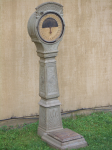
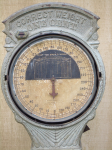
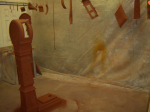
Here is my latest restoration. Not a piece of furniture, or even a house - but rather an ornate Victorian cast iron penny scale from the 1890's. Made by the National Weighing Machine Co. of NY. The scale sold on ebay and the buyer hired me to restore it (My business is Custom Woodworking & Restorations - Nichols NY - 24 yrs. exp.) it is on it's way to Oregon as I type this.
I had to make a new bezel, new paper face, new pointer, have keys made to the locks, dissasemble and sandblast it, grind & fill the castings, 3 color paint job, clean and lube works. A lot of work. It's painted with an acrylic enamel in a satin finish. I underestimated & under priced the amount of time and work it would take - it took about 2 1/2 wks., but it was a fun project and it really turned out great. Pictures don't do it justice, anything that looks good in a flat 2 dimensional picture generally looks even better in person - as is the case here. woodwright
A Victorian Restoration
Archive summary
General Discussion thread on victorianforum.com · started December 1, 2008 by woodwright · 18 posts, 20 image attachments · discussion in 2008.
Here is my latest restoration. Not a piece of furniture, or even a house - but rather an ornate Victorian cast iron penny scale from the 1890's. Made by the National Weighing Machine Co. of NY. The scale sold on ebay and the buyer hired me to restore it (My business is Custom…
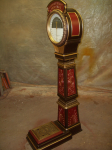
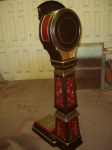
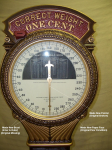
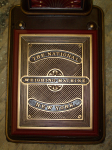
Truly spectacular woodwright. Thanks for sharing it.
WOW, really good restoration job, well done.
Beautiful restoration! :)
I just stumbled upon this penny machine going on the block soon, with a 7-10k auction estimate, they are not exactly giving it away either.
http://www.liveauctioneers.com/item/5952456?from=NL174
http://www.liveauctioneers.com/item/5952456?from=NL174
Thanks for the compliments on the restoration. The guy received it and loves it - he agreed pictures didn't do it justice.
In researching this scale preparing to restore it, I spoke w/ a guy in Virginia that collects coin-op scales (he has 2-300 of them). Nice guy - very knowledgeable and helpful with his information about them. I sent him finished pictures of it, he too was impressed and as a result, it looks like I will be restoring 2 coin-op scales for him also.
I googled the guy that bought my scale off ebay & I restored it for - just for the hell of it. He's bought 700 items on ebay in the last 6 months - not cheap stuff either. He has expensive taste, so I googled him to see what would turn up. Here's what I found - This is pretty funny, check out this link: http://www.cbsnews.com/stories/2005/11/08/national/main1026196.shtml ; I'm pretty sure it's the same guy. Maybe he'll become a regular customer.
Coin op stuff is highly collectible - and can get pricey. The strength tester mentioned by jacon4 is nice, it sold for $4,500 - less than it's estimate - but still not cheap. John
In researching this scale preparing to restore it, I spoke w/ a guy in Virginia that collects coin-op scales (he has 2-300 of them). Nice guy - very knowledgeable and helpful with his information about them. I sent him finished pictures of it, he too was impressed and as a result, it looks like I will be restoring 2 coin-op scales for him also.
I googled the guy that bought my scale off ebay & I restored it for - just for the hell of it. He's bought 700 items on ebay in the last 6 months - not cheap stuff either. He has expensive taste, so I googled him to see what would turn up. Here's what I found - This is pretty funny, check out this link: http://www.cbsnews.com/stories/2005/11/08/national/main1026196.shtml ; I'm pretty sure it's the same guy. Maybe he'll become a regular customer.
Coin op stuff is highly collectible - and can get pricey. The strength tester mentioned by jacon4 is nice, it sold for $4,500 - less than it's estimate - but still not cheap. John
Beautiful restoration. Do you have a website? Would like to see more of your work!
No, I don't have a website, something I still need to do. Right now I'm actually working at shifting my business from custom work and restorations to making a product - several products actually.
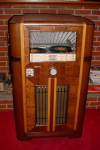
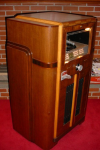
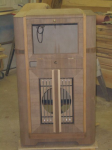
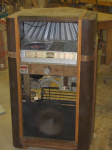
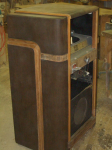
Here are a few before & after pictures of a Seeburg Jukebox (1936 Symphonola, plays 78's) I did the cabinet on for Blue Moon Jukebox Co. It's done in a Walnut and Curly Walnut veneer w/ solid Walnut & Maple trim - the top and bottom doors were missing when I got it. I had to make them based on a photograph of another jukebox like it. I've done dozens of jukebox cabinets for Blue Moon over the last 10 yrs. woodwright
Here are a few before & after pictures of a Seeburg Jukebox (1936 Symphonola, plays 78's) I did the cabinet on for Blue Moon Jukebox Co. It's done in a Walnut and Curly Walnut veneer w/ solid Walnut & Maple trim - the top and bottom doors were missing when I got it. I had to make them based on a photograph of another jukebox like it. I've done dozens of jukebox cabinets for Blue Moon over the last 10 yrs. woodwright
Absolutely beautiful work. You should be proud! Good luck with your new adventures in shifting the business to making products.
Thanks for sharing!
Thanks for sharing!
Would you also restore old cash registers? Are you local to me in NJ?
Also, any tips for stripping old interior paneled shutters? I have some that were faux grained then painted white, so I used some citrus strip and also tried some peel away, but would rather just send them to a dip & strip then have to do all the heavy lifting myself. The citrus strip ones held the original graining underneath pretty well, so that might be just touch up with stain. Do you think varnish or shellac for top coat?
All my doors were also grained originally, so if I want to get them back...could be unlimited work. I am being discouraged by husband, so long list, not short list.
Also, any tips for stripping old interior paneled shutters? I have some that were faux grained then painted white, so I used some citrus strip and also tried some peel away, but would rather just send them to a dip & strip then have to do all the heavy lifting myself. The citrus strip ones held the original graining underneath pretty well, so that might be just touch up with stain. Do you think varnish or shellac for top coat?
All my doors were also grained originally, so if I want to get them back...could be unlimited work. I am being discouraged by husband, so long list, not short list.
amadara - I've never restored a cash register - probably best left to someone who has, to treat the mechanics of it properly rather than me trying to figure it out. Google antique cash registers, restore cash registers, etc. - you'll find lots of websites & information about them - probably someone near you too. Some of the old ones are really ornate and look great restored - a couple of antique shows we go to every year has a guy that restores them - I think from somewhere near Syracuse NY.
I'm in upstate NY - near Binghamton/ Elmira - not near NYC. I don't do a lot of stripping/ refinishing - it's a messy business w/ some nasty chemicals. The little bit of stripping I do, I do by hand w/ chemical strippers (strippers w/ Methylene Chloride are the fastest strippers - they are also the most noxious - exercise caution when using them). If you want to save/ preserve the graining beneath the paint you'll have to use something mild that won't strip it too - you'll have to experiment. I don't know what will or won't take it off (John Hutchinson of Rose Valley Restoration a member here may be able to help you better). Here's a link that talks about different types of stripping including different dipping methods: http://www.mirrorresilvering.com/furniture_finishing.htm ; I would not use lye/ caustic soda. It will dissolve everything, including the glue holding them together - it also darkens the wood very noticeably -bleaching it w/ oxcalic acid will lighten it - but it won't be the same. Stay away from lye.
For topcoats - originally it probably had a shellac finish. Shellac dries very fast and is not easy to brush because it dries so fast. It is compatible with virtually every finish and generally won't have any compatibility issues using it, although if the original finish was shellac over the graining it could soften that if overworked (it's alcohol based). Sometimes shellac is used as a seal coat between two different finishes to avoid fisheye (usually from silicone's - like furniture polish) - shellac won't fisheye or to avoid finish compatibility problems. Varnish is slower drying, and easier to brush - probably a better choice for you. Test a small inconspicuous area first & see how it reacts & looks. Most professional shops today use one of the several types of Lacquers available. I generally spray/ use a precatylized lacquer or a conversion varnish (has hardener and catalyst added - a very hard & resistant finish) - but it's only available to the trade. Good luck with your projects.
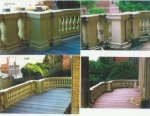
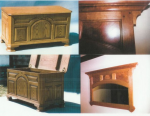
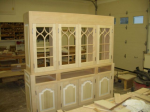
Here are some photos of new work (not repair/ restoration) I've done. #1 BR Suite - Walnut & Mahogany w/ Walnut Burl panels, #2 & 3 - Cherry A&C kitchen, #4 & 5 - Cherry & Curly Cherry Mantle & Bookcases, #6 - Reproduced & installed Greek Revival porch handrail, #7 - Ash blanket chest & Cherry A&C Mirror, #8 - Maple Doors (a friend made the cabinet, asked me to make & hang the doors for it) - it was painted when finished. woodwright
I'm in upstate NY - near Binghamton/ Elmira - not near NYC. I don't do a lot of stripping/ refinishing - it's a messy business w/ some nasty chemicals. The little bit of stripping I do, I do by hand w/ chemical strippers (strippers w/ Methylene Chloride are the fastest strippers - they are also the most noxious - exercise caution when using them). If you want to save/ preserve the graining beneath the paint you'll have to use something mild that won't strip it too - you'll have to experiment. I don't know what will or won't take it off (John Hutchinson of Rose Valley Restoration a member here may be able to help you better). Here's a link that talks about different types of stripping including different dipping methods: http://www.mirrorresilvering.com/furniture_finishing.htm ; I would not use lye/ caustic soda. It will dissolve everything, including the glue holding them together - it also darkens the wood very noticeably -bleaching it w/ oxcalic acid will lighten it - but it won't be the same. Stay away from lye.
For topcoats - originally it probably had a shellac finish. Shellac dries very fast and is not easy to brush because it dries so fast. It is compatible with virtually every finish and generally won't have any compatibility issues using it, although if the original finish was shellac over the graining it could soften that if overworked (it's alcohol based). Sometimes shellac is used as a seal coat between two different finishes to avoid fisheye (usually from silicone's - like furniture polish) - shellac won't fisheye or to avoid finish compatibility problems. Varnish is slower drying, and easier to brush - probably a better choice for you. Test a small inconspicuous area first & see how it reacts & looks. Most professional shops today use one of the several types of Lacquers available. I generally spray/ use a precatylized lacquer or a conversion varnish (has hardener and catalyst added - a very hard & resistant finish) - but it's only available to the trade. Good luck with your projects.
Here are some photos of new work (not repair/ restoration) I've done. #1 BR Suite - Walnut & Mahogany w/ Walnut Burl panels, #2 & 3 - Cherry A&C kitchen, #4 & 5 - Cherry & Curly Cherry Mantle & Bookcases, #6 - Reproduced & installed Greek Revival porch handrail, #7 - Ash blanket chest & Cherry A&C Mirror, #8 - Maple Doors (a friend made the cabinet, asked me to make & hang the doors for it) - it was painted when finished. woodwright
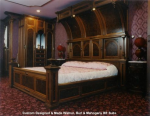

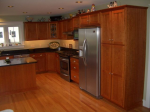
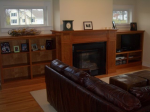
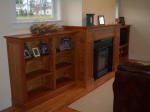
Wow! Your work is spectacular, wish I had you on site for all your expertise, even if I had to be the hands.
I took some furniture classes with Ed Feldman, and he recommended making your own shellac mix from chips so you could thin to an easier running consistency, but have been unable to locate the chip varnish and was told numerous times that they dont sell it that way anymore. I think I am going to proceed with varnish per your suggestions, as just an amateur, need an easier solution and have used that before. I think I'll stick with the Messy Citrus Strip for now, as you know I am loathe to wear gloves or mask.
Thanks for the expertise. You are always a great inspiration.
AM
I took some furniture classes with Ed Feldman, and he recommended making your own shellac mix from chips so you could thin to an easier running consistency, but have been unable to locate the chip varnish and was told numerous times that they dont sell it that way anymore. I think I am going to proceed with varnish per your suggestions, as just an amateur, need an easier solution and have used that before. I think I'll stick with the Messy Citrus Strip for now, as you know I am loathe to wear gloves or mask.
Thanks for the expertise. You are always a great inspiration.
AM
Amadara, you should reach out to John Hutchinson at Rose Valley Restorations. http://www.rosevalleyrestorations.com/
I may be overstepping my bounds and letting on to a "secret formula", but John imports his own Italian shellac chips and creates his own shellac, which went onto my Merklen Table, for example.
Maybe he can help you get what you need.
I may be overstepping my bounds and letting on to a "secret formula", but John imports his own Italian shellac chips and creates his own shellac, which went onto my Merklen Table, for example.
Maybe he can help you get what you need.
Quote from: amadara
Wow! Your work is spectacular, wish I had you on site for all your expertise, even if I had to be the hands.
I took some furniture classes with Ed Feldman, and he recommended making your own shellac mix from chips so you could thin to an easier running consistency, but have been unable to locate the chip varnish and was told numerous times that they dont sell it that way anymore. I think I am going to proceed with varnish per your suggestions, as just an amateur, need an easier solution and have used that before. I think I'll stick with the Messy Citrus Strip for now, as you know I am loathe to wear gloves or mask.
Thanks for the expertise. You are always a great inspiration.
AM
Shellac flakes are available from Woodworker's Supply, among other places. "Orange" (and perhaps "Garnet") are adequate for most restoration products. The restorer I trained under used denatured alcohol rather than the fancy-shmancy special solvent sold by most companies vending shellac flakes and so that is what we have always used; I am uncertain as to what the pros and cons of the proprietary solvents may be.
To 'Amadara/ Woodright and John W.
John asked me to put a few thoughts down in regards to your questions, RE: your cabinets, work process and shellac in general. Thank you Mr. Woodright for the reference.
-In regards to the grain painting on your cabinets, aside from being very cool, it sounds like you are having a bit of good luck. If the 'citrus-strip' is taking off the top layer of paint without damaging the under layers of grain paint, stick with that. It means the top layers are acrylic, and most likely the grain painting is vinegar or casein based (i.e. milk paint.) This type of paint once cured is like a rock. However, Methylene Chloride or any chemical stripper will remove everything.
-That being said once you get down to the layer you want, you can use shellac as a seal coat, just do a test somewhere first and make sure it does not burn/lift the surface. Traditionally, painted surfaces are coated with wax as the protective layer. However, for the kitchen this is not viable. Neither is shellac for your top/finish coat. Shellac does not do well with scrubbing, nor will it really penetrate to the wood, because of the paint, as it should do for the best protection. Having just done this with a friend, in their kitchen, what I recommend which is easy and utilitarian, is a water based poly acrylic. Again because they are kitchen cabinets. The acrylic can be brushed or sprayed, and comes in a matte finish to not distract your eye from the paint. Do not use 'varnish' in a kitchen application....great for boats and doors, not kitchen cabinets.
I hope this helps.
-In regards to shellac, what you are looking for are called 'flakes,' and yes it is sold in many woodworking catalogs. In regards to the quality, I cannot attest, because as John said I import my own. And yes, we will be selling restoration products, including shellac starting in January '09. The only vehicle for dissolving shellac is 'denatured alcohol.' On a professional level we use 'anhydrous alcohol,' which is guaranteed to be 99.6% pure. Unless you work for a chemical company this is not available to the public. The point is though, NO, you do not need to buy whatever else they are selling to dissolve the flakes. Making your own shellac, is really an art, in regards not to just the process, but your final product, temperature and humidity. Maybe I'll write a book.
-If you have any further questions, please fee free to contact us, either here, or at [email removed]
-I hope I was able to answer a few of your questions.
John, Rose Valley
John asked me to put a few thoughts down in regards to your questions, RE: your cabinets, work process and shellac in general. Thank you Mr. Woodright for the reference.
-In regards to the grain painting on your cabinets, aside from being very cool, it sounds like you are having a bit of good luck. If the 'citrus-strip' is taking off the top layer of paint without damaging the under layers of grain paint, stick with that. It means the top layers are acrylic, and most likely the grain painting is vinegar or casein based (i.e. milk paint.) This type of paint once cured is like a rock. However, Methylene Chloride or any chemical stripper will remove everything.
-That being said once you get down to the layer you want, you can use shellac as a seal coat, just do a test somewhere first and make sure it does not burn/lift the surface. Traditionally, painted surfaces are coated with wax as the protective layer. However, for the kitchen this is not viable. Neither is shellac for your top/finish coat. Shellac does not do well with scrubbing, nor will it really penetrate to the wood, because of the paint, as it should do for the best protection. Having just done this with a friend, in their kitchen, what I recommend which is easy and utilitarian, is a water based poly acrylic. Again because they are kitchen cabinets. The acrylic can be brushed or sprayed, and comes in a matte finish to not distract your eye from the paint. Do not use 'varnish' in a kitchen application....great for boats and doors, not kitchen cabinets.
I hope this helps.
-In regards to shellac, what you are looking for are called 'flakes,' and yes it is sold in many woodworking catalogs. In regards to the quality, I cannot attest, because as John said I import my own. And yes, we will be selling restoration products, including shellac starting in January '09. The only vehicle for dissolving shellac is 'denatured alcohol.' On a professional level we use 'anhydrous alcohol,' which is guaranteed to be 99.6% pure. Unless you work for a chemical company this is not available to the public. The point is though, NO, you do not need to buy whatever else they are selling to dissolve the flakes. Making your own shellac, is really an art, in regards not to just the process, but your final product, temperature and humidity. Maybe I'll write a book.
-If you have any further questions, please fee free to contact us, either here, or at [email removed]
-I hope I was able to answer a few of your questions.
John, Rose Valley
One of the best book's i have read on finishing is Bob Flexner's "Understanding Wood Finishing". Flexner is the guy who challenged Antique Roadshow's so called furniture "experts" on the original surface nonsense some were advocating on the show which forced Roadshow producer Peter Cook to publish the following letter in 2002.
The editor of the magazine, Bob Flexner, contacted the shows' producers and explained the impact the misunderstanding was having on the public's perception concerning restoring/refinishing older and antique furniture. Peter B. Cook, executive producer of the television program, wrote a response that was published in the June 2002 issue of the magazine. Here are some excerpts from the article
"A while ago, we at Antiques Roadshow received a letter from Professional Refinishing editor Bob Flexner, pointing out that our apparent obsession (my word, not his) with 'original finish' has had the effect of misleading the public about what repairing and refinishing actually do to the value of furniture - most furniture, that is.
We're now in our sixth season of Antiques Roadshow on PBS... This means, of course, that there's a real premium on the accuracy, dependability and usefulness of the information we provide. ... I'd hate to think that we've created a subset of American furniture owners living in dread of a fatal financial misstep (though Antiques Roadshow is, after all, a show about value, including market value). ... Still, if I'm reading things correctly, it sounds as if Roadshow furniture experts are saying, by and large, 'leaving things alone is good, refinishing is bad.'
Understandably, our Americana experts on the Roadshow live for wonderful old pieces of furniture that have somehow survived in terrific condition - pieces not used too hard, left out in strong light for long periods of time or forced to survive a flooded cellar. Most old furniture, of course, doesn't come close to meeting those standards. On the contrary, most furniture has been well used (even abused), scratched, broken, and often repaired many times. How could such furniture not be improved by a good job of refinishing or restoring? ... A secretary, made by Christian Shively in about 1820, was brought to the Indianapolis tapings this year. It had been stripped and refinished by the owner to remove paint that had been applied many decades earlier. Appraiser John Hays endorsed the need for refinishing and complimented the quality of the work.
... So where does that leave us? Let the record show that Antiques Roadshow generally agrees with this notion: Well-conceived and well-executed refinishing and restoration usually enhances the value of just about any piece of old furniture. Exceptions are those rare (often museum-quality) pieces that have somehow survived in great 'original' condition. If we say or imply to the contrary, we should be called on it."
Peter B. Cook,
Executive producer
The Antiques Road show
The editor of the magazine, Bob Flexner, contacted the shows' producers and explained the impact the misunderstanding was having on the public's perception concerning restoring/refinishing older and antique furniture. Peter B. Cook, executive producer of the television program, wrote a response that was published in the June 2002 issue of the magazine. Here are some excerpts from the article
"A while ago, we at Antiques Roadshow received a letter from Professional Refinishing editor Bob Flexner, pointing out that our apparent obsession (my word, not his) with 'original finish' has had the effect of misleading the public about what repairing and refinishing actually do to the value of furniture - most furniture, that is.
We're now in our sixth season of Antiques Roadshow on PBS... This means, of course, that there's a real premium on the accuracy, dependability and usefulness of the information we provide. ... I'd hate to think that we've created a subset of American furniture owners living in dread of a fatal financial misstep (though Antiques Roadshow is, after all, a show about value, including market value). ... Still, if I'm reading things correctly, it sounds as if Roadshow furniture experts are saying, by and large, 'leaving things alone is good, refinishing is bad.'
Understandably, our Americana experts on the Roadshow live for wonderful old pieces of furniture that have somehow survived in terrific condition - pieces not used too hard, left out in strong light for long periods of time or forced to survive a flooded cellar. Most old furniture, of course, doesn't come close to meeting those standards. On the contrary, most furniture has been well used (even abused), scratched, broken, and often repaired many times. How could such furniture not be improved by a good job of refinishing or restoring? ... A secretary, made by Christian Shively in about 1820, was brought to the Indianapolis tapings this year. It had been stripped and refinished by the owner to remove paint that had been applied many decades earlier. Appraiser John Hays endorsed the need for refinishing and complimented the quality of the work.
... So where does that leave us? Let the record show that Antiques Roadshow generally agrees with this notion: Well-conceived and well-executed refinishing and restoration usually enhances the value of just about any piece of old furniture. Exceptions are those rare (often museum-quality) pieces that have somehow survived in great 'original' condition. If we say or imply to the contrary, we should be called on it."
Peter B. Cook,
Executive producer
The Antiques Road show
The reason I do not watch T.v. nor own a gun, is because of the "Antiques Roadshow," otherwise I would have put a shotgun shell through the T.V. and "Antiques Roadshow." I wish I had a $ for every new client that I had to explain the differences between 'old finish,' 'new finish' and "original finish." I would be very rich indeed, for their is NO SUCH thing as "original finish." I think I will contact John W. and discuss this subject some more. P.s. I am also a big fan of Mr. Flexner, he has done a lot for our industry, even the tiny micro shops like mine.
John RV
John RV
The "original surface" fetish started in america during the 1970s when a relatively obscure art history professor, John T. Kirk, wrote a book with a chapter titled "Buy It Ratty And Leave It Alone". Mr Kirk was trying to stop the then disgraceful practice of some who were stripping PAINTED furniture in an attempt to sell it as something else. Naturally, some dealers/collectors took what was a good thing and turned it into a bad thing. In 2000, Kirk published an article in The Magazine Antiques commenting on the movement he inadvertently started 30 years before. Below are some excerpts from that article.
"In this article I wish to explore in detail the evolving understanding of what is today near the top of the list of questions most scholars, dealers, and collectors ask themselves when looking at an early piece: Is the surface original, and if so, how should it be treated?
In 1975 I wrote in The Impecunious Collector's Guide to American Antiques a chapter entitled "Buy It Ratty and Leave It Alone," addressing the then-current practice of removing original paint and its patina from furniture."
"Many seventeenth- and eighteenth-century painted pieces were made of two or more woods because each had a special structural quality needed in the design. A windsor chair, for example, might employ maple for the turned stretchers, legs, and supports under the fronts of the arms because its closed-grain character turned beautifully; pine, yellow poplar, or another soft wood made the shaping of the saddle seat easy; and springy ash or hickory might be used for the back spokes and top rail. A unifying coat of paint gave the chair a strong silhouette while covering the varying colors and grain patterns of the woods. The late nineteenth-and twentieth-century collectors who stripped the old paint, and the reproducers of early forms, reveled in the contrasts the different woods produced."
"After I wrote "Buy It Ratty and Leave It Alone," many collectors, and therefore dealers, took the ideas it expressed seriously, and, for a time, an untouched, grungy surface became more in demand, and even came to be known as a "Kirk surface."
"During the late 1970s and early 1980s the love and monetary worth of the ratty and dirty expanded from painted furniture to pieces that were highly styled and made to show off expensive woods, such as walnut, cherry, and mahogany. By the late 1990s the acceptance of the grungy was so widespread that on December 10, 1999, the Wall Street Journal ran an article entitled "Collecting, Today's Art Lesson: Grime Pays," with a subheading announcing "A Status Symbol: Filthy Furniture."
"The presence of dirty varnish on an object made to exhibit grain color and pattern as well as carving and pattern can help determine if parts have been changed, but it may unnecessarily reduce our ability to appreciate the maker's original vision."
"Dirt on a painted piece almost always means leaving it alone, for any cleaning normally diminishes the quality of the surface, but what about high-style pieces? Should they ever be cleaned of dirty varnish so that one can more dearly see the intention of the maker?"
"Thus, what to clean is really a two-part question. Painted pieces usually should not be touched because their surfaces are like those of early bronzes, where the original finish has become pitted, encrusted, and discolored, and we generally accept that it cannot be altered. In most cases it is even inadvisable to remove the finishing coat of varnish given to many painted pieces to make them brighter and easier to clean: in most cases the paint, varnish, and dirt cannot be separated from one another and leave a surface worth looking at. On the other hand, objects that were originally covered with a clear varnish to enhance and give a gloss to beautiful wood can be cleaned and revarnished without diminishing the maker's final aesthetic statement. (Undoubtedly, one of the reasons the cleaning of varnished pieces became unfashionable is that in the past many objects were ruined by drastic overcleaning.) Museums will probably take the lead in such cleaning, and there will undoubtedly be an outcry against it, as happened when restorers began to remove much of the famous golden light from Rembrandt's paintings by cleaning away yellowed varnish."
" The present high value of a dirty varnish on beautiful wood will diminish when connoisseurs begin to want to see clearly the maker's original choice of materials and design features and the glowing patina the wood has achieved."
"In this article I wish to explore in detail the evolving understanding of what is today near the top of the list of questions most scholars, dealers, and collectors ask themselves when looking at an early piece: Is the surface original, and if so, how should it be treated?
In 1975 I wrote in The Impecunious Collector's Guide to American Antiques a chapter entitled "Buy It Ratty and Leave It Alone," addressing the then-current practice of removing original paint and its patina from furniture."
"Many seventeenth- and eighteenth-century painted pieces were made of two or more woods because each had a special structural quality needed in the design. A windsor chair, for example, might employ maple for the turned stretchers, legs, and supports under the fronts of the arms because its closed-grain character turned beautifully; pine, yellow poplar, or another soft wood made the shaping of the saddle seat easy; and springy ash or hickory might be used for the back spokes and top rail. A unifying coat of paint gave the chair a strong silhouette while covering the varying colors and grain patterns of the woods. The late nineteenth-and twentieth-century collectors who stripped the old paint, and the reproducers of early forms, reveled in the contrasts the different woods produced."
"After I wrote "Buy It Ratty and Leave It Alone," many collectors, and therefore dealers, took the ideas it expressed seriously, and, for a time, an untouched, grungy surface became more in demand, and even came to be known as a "Kirk surface."
"During the late 1970s and early 1980s the love and monetary worth of the ratty and dirty expanded from painted furniture to pieces that were highly styled and made to show off expensive woods, such as walnut, cherry, and mahogany. By the late 1990s the acceptance of the grungy was so widespread that on December 10, 1999, the Wall Street Journal ran an article entitled "Collecting, Today's Art Lesson: Grime Pays," with a subheading announcing "A Status Symbol: Filthy Furniture."
"The presence of dirty varnish on an object made to exhibit grain color and pattern as well as carving and pattern can help determine if parts have been changed, but it may unnecessarily reduce our ability to appreciate the maker's original vision."
"Dirt on a painted piece almost always means leaving it alone, for any cleaning normally diminishes the quality of the surface, but what about high-style pieces? Should they ever be cleaned of dirty varnish so that one can more dearly see the intention of the maker?"
"Thus, what to clean is really a two-part question. Painted pieces usually should not be touched because their surfaces are like those of early bronzes, where the original finish has become pitted, encrusted, and discolored, and we generally accept that it cannot be altered. In most cases it is even inadvisable to remove the finishing coat of varnish given to many painted pieces to make them brighter and easier to clean: in most cases the paint, varnish, and dirt cannot be separated from one another and leave a surface worth looking at. On the other hand, objects that were originally covered with a clear varnish to enhance and give a gloss to beautiful wood can be cleaned and revarnished without diminishing the maker's final aesthetic statement. (Undoubtedly, one of the reasons the cleaning of varnished pieces became unfashionable is that in the past many objects were ruined by drastic overcleaning.) Museums will probably take the lead in such cleaning, and there will undoubtedly be an outcry against it, as happened when restorers began to remove much of the famous golden light from Rembrandt's paintings by cleaning away yellowed varnish."
" The present high value of a dirty varnish on beautiful wood will diminish when connoisseurs begin to want to see clearly the maker's original choice of materials and design features and the glowing patina the wood has achieved."