Hello from Brooklyn New York.
I have been reading your wonderful site for months, its time to get wet.
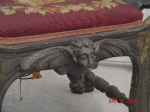
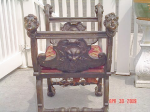
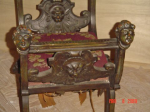
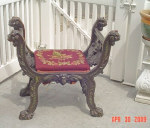
Can anyone help me to identify this carved bench I recently purchased.
As you can see the previous owner gilded then painted over the original finish.
Thanks
[Historical image from i432.photobucket.com — no longer available]
[Historical image from i432.photobucket.com — no longer available]
[Historical image from i432.photobucket.com — no longer available]
[Historical image from i432.photobucket.com — no longer available]
[Historical image from i432.photobucket.com — no longer available]
[Historical image from i432.photobucket.com — no longer available]
New member needs assistance identifying carved bench
Archive summary
Victorian Furniture thread on victorianforum.com · started May 3, 2009 by barrysantiques · 6 posts, 10 image attachments · discussion in 2009.
Hello from Brooklyn New York. I have been reading your wonderful site for months, its time to get wet. Can anyone help me to identify this carved bench I recently purchased. As you can see the previous owner gilded then painted over the original finish. Thanks [Historical…
Barry, welcome. Do you have larger images that you can send me via email? info @ Rarevictorian.com
John
John
Here are some more pictures.
I can't be of much help other than to speculate that it is European, late 19th century.
I can't be of much help other than to speculate that it is European, late 19th century.
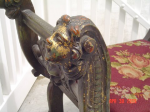
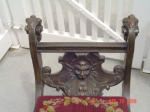
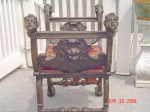
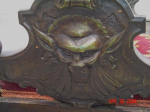
Hello John :)
Sorry about the delay, thank you for lokking.
Will be posting a piece shortly that I originally thought to be Horner.
Have a great week,
Barry
Sorry about the delay, thank you for lokking.
Will be posting a piece shortly that I originally thought to be Horner.
Have a great week,
Barry
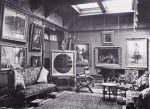
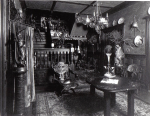
I suspect the piece is American. It is an example of the furniture designed in the "antique revival" style popular in the 1890s. While the Vanderbilts brought over real antique furniture from Europe to furnish their castle-like homes, most Americans made do with home-grown copies of European antiques. In the case of this "curule" stool, the precedent for the design is 16th century Renaissance Italy. These stools were particularly popular in halls. Attached is a pic of one of the largest late Victorian houses in Toronto (built 1891 by American architects) where a similiar stool is used in the art gallery. The second pic shows a variant of this type of stool used in a hall.
The griffin heads on the last picture that Canadian Maple posted look to match the griffins on my labeled R.J. Horner chair. If only I could flip the chair in photo to look for a label on the bottom of the seat. That particular chair certainly looks American.
I still feel that the "bench" pictured first in the post is not American. I have not personally run across American 1890s furniture using the "winged head" shown on the skirt. I wonder if some of that paint, which looks more broadly worn in areas than a "previous owner" could have recently done unless that owner was currently 80 years old. Especially the worn green tinting. Paint - another trait not commonly seen in late-19th century American.

I still feel that the "bench" pictured first in the post is not American. I have not personally run across American 1890s furniture using the "winged head" shown on the skirt. I wonder if some of that paint, which looks more broadly worn in areas than a "previous owner" could have recently done unless that owner was currently 80 years old. Especially the worn green tinting. Paint - another trait not commonly seen in late-19th century American.